Category: Uncategorized

  • From Tech to Top Agent:  Karishma Kiri on Finding Her Why

    From Tech to Top Agent: Karishma Kiri on Finding Her Why

    Karishma Kiri shares how she pivoted from a successful career in tech to become a real estate agent, how she stands out in an industry where the average person knows 13 real estate agents, and some of the big and small moments that have stayed with her from her career…

    Note: this interview was edited and condensed

    Can you introduce yourself?

    I’m Karishma Kiri. I’ve been in Seattle for 27 years, originally from India by way of Southern California. I’m now a real estate broker — after a long career in tech.

    Can you walk us through your career journey?

    So I do think I’m a little bit weird because when I was 13, my parents asked me what kind of magazine subscription I wanted – and I said, “I want Business Week and the Wall Street Journal.” I loved following corporate strategy battles like Pepsi and Coke or Toyota and Honda – it was exciting for me.

    When I interned at Microsoft during college, I realized, this is my jam. It was a very meritocratic environment and even as an intern, you owned different aspects. I decided to come back full-time and it really brought together my love of corporate strategy and the ownership mindset. Over 11 years there, I worked in product management and led emerging markets initiatives.

    I became fascinated with how people make big, life-changing decisions like housing.

    How did you transition from product manager to real estate broker?

    I’d always wondered: could I be an entrepreneur? So I left Microsoft to join a friend’s digital agency. Around that same time, my husband Dilip and I bought a house — and I became fascinated with how people make big, life-changing decisions like housing. I saw a gap in the industry for strategic, business-minded real estate advising.

    I’ve heard the average person knows 13 real estate agents. So there are more agents than people. But I wanted to bring in that business acumen and ownership mindset so that people knew that they weren’t hiring a transactor, they were hiring an advisor – for one of the most expensive things that most people ever buy.

    Karishma and her husband and business partner, Dhilip

    I wanted to see if I could do it because I knew my why.

    What was going through your head when you left tech for real estate?

    I initially felt scared and discouraged because everyone seemed to be against the idea except for my husband and a few family members. And so I said, I don’t know how I’m going to do this, but I wanted to see if I could do it because I knew my why.

    I did a lot of training. I joined one of the best offices in the state to surround myself with top talent and learn fast.

    How do you differentiate yourself from the other 11,000 agents at that time? People saw that I wasn’t desperate for a sale and I was picky about what they were buying or how they were selling. They realized, “She’s actually more interested in the outcome and helping us do the right thing, not just getting a deal done.”

    How did your business-owner mindset shape your approach?

    In real estate, you have to do a mixture of servicing clients and prospecting for new clients. So that ownership mindset helped me think about all these business aspects versus saying, “Oh no, I’m not really good at marketing, so I can’t do this part.” You don’t have a choice. You have to do the marketing, be the salesperson, be the execution person, and manage your P&L.

    I teach a class at Windermere called Facing Your Fears to new brokers, where I teach other agents to one, understand your why, but two, to put on the mini CEO hat and start thinking about the foundational aspects of your business that you need to build.
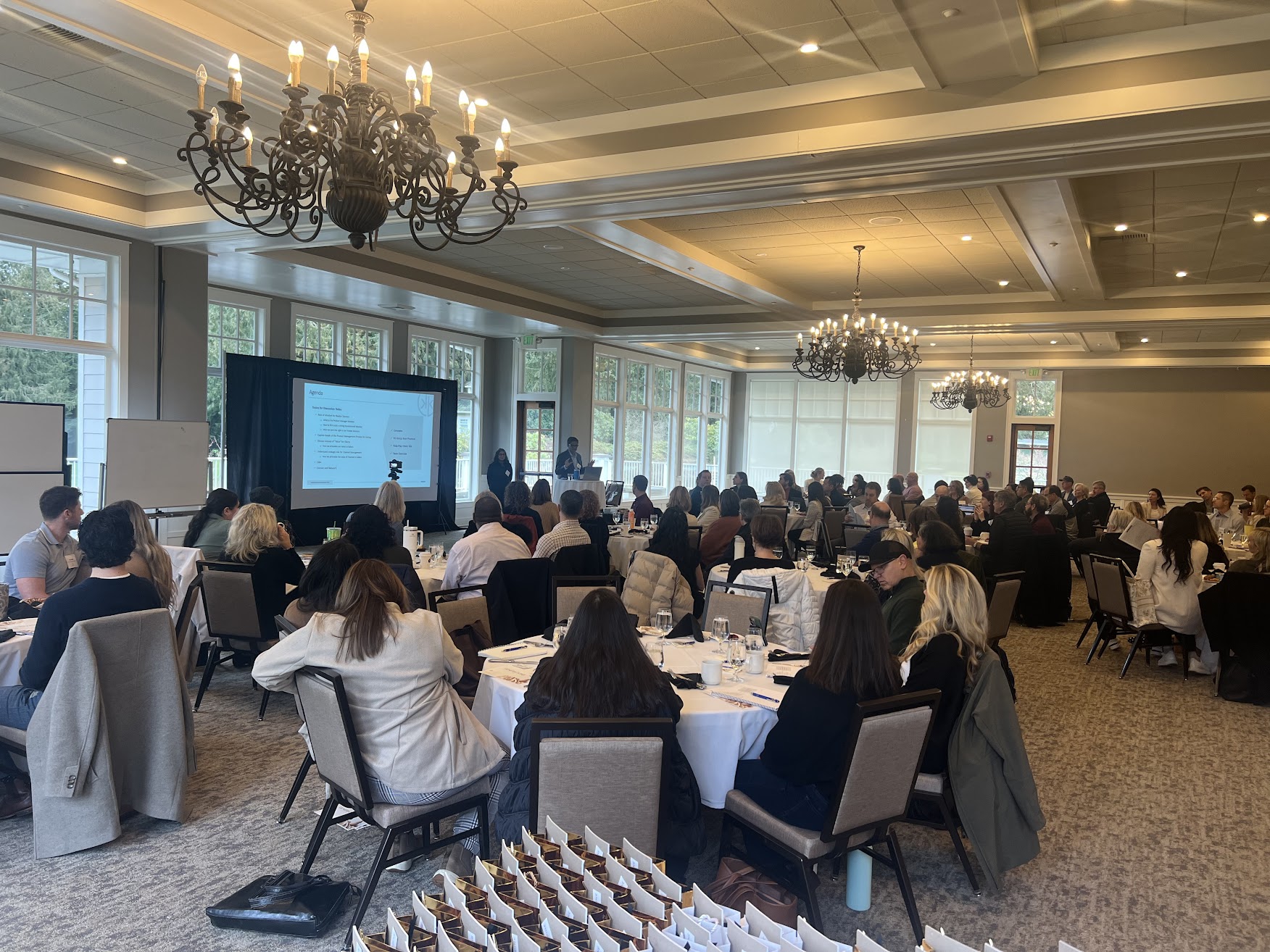
    Teaching a class at Windermere

    I wanted to bring my effort and purpose into the area of housing; where people live their lives and make memories.

    You seem to have found your “why” early. How can others do the same?

    For me, it came down to what made me excited. When you’re trying to figure out your why, it’s really important to first, understand what gets you excited and then, what are the skills you need to do what gets you excited. And if there’s a complete mismatch, either you have to build those skills or you may have to consider something different.

    For example, I really wanted to focus aspects of my career that helped people on something very fundamental in their life. If you think of the life fundamentals – it is housing, education, food, and health. So I wanted to bring my effort and purpose into the area of housing; where people live their lives and make memories.

    Listing a house is like a product management exercise

    But going back to real estate – combining the passion for housing and bringing in the wealth of experience from the tech world, we are able to help buyers and sellers navigate our dynamic market.

    Listing a house is like a product management exercise, so it’s bread and butter for me because I’m still a product manager at heart. On the buyer side, my detail-oriented, protective side comes out as we want our buyers to make informed and sound decisions. So it’s a lot of those core skills that I have been able to utilize in real estate.

    We will talk ourselves out of business if it’s the right thing for the client.

    What else has helped you be successful in real estate?

    The combination of being able to really connect with people and knowing that they know that we have their back – and grounding it on data and a set of processes and best practices.

    We will talk ourselves out of business if it’s the right thing for the client. And if that means we’re telling someone to not list their house because it’s a great rental and they may not sell it for another five years, we technically lost that sale, but for us, it’s that partnership and advisory approach.

    I’m also not afraid of data and that allows some agility to figure out if there are different blips happening in the market. A lot of people don’t track the data – they don’t know how to do it or they don’t want to do it. I love all of it, and it’s important to stay updated on the data so that again, we can advise and guide our clients as they make these large-scale decisions since real estate involves a lot of money.

    Karishma (far right, first row) with Bill Gates during her Microsoft days

    Can you share a career moment you’re proud of?

    When I was at Microsoft working on emerging markets, we were trying to help people learn more about technology in environments where the cost of owning a computer was prohibitive.

    I thought, what if we teach teachers how to use technology and create learning centers? The teachers teach students and the students are going to be the future users of technology. The whole team loved this idea and we started fleshing it out.

    We launched it in India and then it turned into a global program called Partners in Learning. The Microsoft India subsidiary nominated me for the Best Practice Award – and Steve Ballmer and Bill Gates presented the award to me at the Global Sales Summit.

    To be a part of that initial seed and getting countries to upskill the younger generation and teach digital literacy meant a lot to me. It’ll stay with me forever that I had that kind of impact.

    What about a meaningful moment from your real estate career?

    Karishma and Dhilip on stage


    We’ve had sellers who needed every single dollar from selling their house because it was going to be their retirement fund. They were so stressed about the sale and whether they’d get enough money. And when we beat what they thought they would get by a significant amount, they were so relieved that they cried.

    My feeling of security has a lot to do with my living environment. It’s an anchor for me. And so maybe in some ways, I’m trying to give some everyone else that same anchor.


    It’s so amazing to work with someone in a way that shapes their future life – and for them to trust you like that.

    We work with people at a lot of price points by design. We’ve had a teacher who works with neurodiverse children, who didn’t think they could afford a home in their target area and we were able to win a house for them over a cash offer by being very strategic. We’ve worked with a former CEO who’s entrusted us with exercises that are millions of dollars.

    I want that full spectrum because we’re doing it to be that partner and advisor. It’s not transactional. For myself, my feeling of security has a lot to do with my living environment. It’s an anchor for me. And so maybe in some ways, I’m trying to give some everyone else that same anchor.

    Thank you Karishma for sharing your career journey with us!

  • “You’ll Never Forget the First Bowl of Ramen You Sell”: Q&A with Mier Wang

    “You’ll Never Forget the First Bowl of Ramen You Sell”: Q&A with Mier Wang

    Investor by day and ramen restaurant owner by night – Mier Wang shares the story of a life-changing dinner that started a restaurant empire, how his hospitality experience translates to his wealth management company, and the advice he would give his younger self…

    Note: this interview was edited and condensed

    Can you introduce yourself?

    I’m Mier Wang. After graduating from Penn in 2013, I started in investment banking, then moved to the buy side as a hedge fund investor.

    That’s where I learned everything about operating, investing and even turning around a business, and, most importantly, working with entrepreneurs. That was the coolest part of my job, and that’s how I got the entrepreneurial bug.

    That “bug” led you to the restaurant world. How did that happen?

    In 2017, I was in California on a diligence trip and ended up at a ramen bar with a friend. I thought the ramen was phenomenal, and I told the chef Tomo, “Dude, you gotta grab a beer with me.” He said, “Let’s grab a thousand beers.” And that began a friendship that became a business partnership.

    How did you go from beers to business partnership?!

    It took a little bit of convincing. Tomo was based in LA and it took me a year to persuade him to move to New York and open a restaurant with me. I even flew out his whole family, helped find them a school for the kids and an apartment. In 2018, we opened our first restaurant. I was 26.

    Building out the first ramen restaurant, TabeTomo

    This was something that both Tomo and I really wanted to do. So even if we failed, So what?

    Did you have any hospitality experience?

    None—other than eating at a lot of restaurants. But I’d always had this dream of opening a Japanese restaurant. At one point in college, I thought I was going to open a sushi restaurant but the sane gods of the world convinced me not to do it back then.

    I joke that restaurants are like sports teams. It’s really cool to own them, but you’ll never really make that much money. But I can bring my friends in and show them a good time.

    How did people react when you told them you were opening a ramen restaurant?

    Some thought I was nuts, others were excited. But you just block out the noise. This was something that both Tomo and I really wanted to do. So even if we failed, So what? I would lose a little money and a little bit of time. I still had my finance job, so I had a safety net.

    But the first year was tough. I would literally work a full day at my job, get off work at 7:00 or 8:00 in the evening, and then I would Uber straight to the restaurant. Wherever they needed help, whether it’s dishwashing or just service, I would try to plug myself in.

    Sushi bar at The Office of Mr. Moto

    What were the biggest lessons from the early days?

    The little things matter. A good dishwasher, payroll, landlords, sick days—things you never think about in finance suddenly become very real. Also, the people really matter. Almost the entirety of our team that started with us at the beginning is still with us today.

    How did you approach growth?

    We have a lot of different ideas both on food and customer experience that we want to dabble with. If we really like the idea, we’ll build it out and if it’s a good idea, then we’re successful and we can continue growing. After ramen, our second restaurant was fast-casual, then our third was a high-end omakase sushi restaurant.

    NYSE tour with members of the Maridea team

    Wealth management is really hospitality, but instead of a plate of sushi, you’re serving a financial strategy.

    And then you started a wealth management company too?

    Yes—Maridea. I raised money and launched it with a few others. It’s now at $600 million in assets under management.

    Wealth management is really hospitality, but instead of a plate of sushi, you’re serving a financial strategy. So a lot of things we do today are the exact same. It’s just that the kitchen that we work in is a little different from the kitchen for a ramen restaurant.

    What career advice would you give your younger self?

    Be open-minded and willing to say yes. I was a bit arrogant early on and thought I was above certain tasks. I think ego got in the way at times.

    It goes back to people and culture. We have a litmus test internally where if anyone is unwilling to pick up another employee’s phone call, that’s a red flag for us. We have to always be willing to take calls from each other and be excited for that conversation.

    You’ll never forget the first product you sell.

    What’s a career moment you’re proud of?
    Honestly, selling my first $20 bowl of ramen. Even though I’ve worked on IPO’s, billion-dollar deals, cool investment opportunities, I think there’s something to be said about just making your first product and selling it.

    We had a three hour wait the first day we opened our first restaurant. And while our kitchen was a total disaster, customers were forgiving. We made it through. You’ll never forget the first product you sell or, you know, the first bowl of ramen.

    Thank you Mier for sharing your career journey with us!

  • Helping People Harmonize with Climbing: Q&A with Jesse Firestone

    Helping People Harmonize with Climbing: Q&A with Jesse Firestone

    A look at Jesse’s journey from web developer to climbing coach, including how he discovered his talent for empowering and helping others, his approach for staying authentic with social media, and his proudest moments as a climbing coach…

    Note: this interview was edited and condensed

    Can you introduce yourself?

    My name is Jesse Firestone and I’m a climbing coach. I help climbers perform at a higher level and get more fulfillment out of the sport. I’m based in the Pacific Northwest but I’ve worked with climbers all over the world, including 6 continents (I’m not too hopeful for Antarctica).

    What led you into climbing coaching?

    I’ve been climbing for more than half my life—about 20 years now. I’ve always been fascinated by what motivates people and what they’re trying to achieve, but I wasn’t necessarily driven to help other people until about 5 or 10 years ago.

    It hit me that if I had had someone whose whole job was to empower me, I probably could have achieved greater things and definitely avoided a lot of heartache and struggle. So I’ve tried to turn myself into that mentor and coach figure that I could have benefited from myself.

    I thought to myself, “There might be something here for you.”


    What did your career look like before coaching?

    I was a web developer in a bunch of different capacities—tiny startups, 500-person companies, and even running my own company for about five years. I burned out pretty hard doing that, but I got to learn a lot of lessons about business ownership, marketing and business development.

    Towards the end of my last job, I was leading a team of developers, and I realized that managing people was something I was really, really into. I felt more excited to show up for work every day to help other people solve problems and to empower them – even more than solving the problems that were on my own plate. And I thought to myself, “There might be something here for you.”

    There’s so much more to owning a business than just having a good product. But I wanted to make sure that I had a good product first.

    How did the transition to full-time coach happen?

    Definitely gradual. I got my first paying client maybe two and a half years before I went full time. For the last six-ish months before I went full-time coaching, I was basically working both jobs full time—way too much. But I didn’t want to give up the stability until I was confident I could make it work. Towards the end, I realized that I had built something new that I was really excited about.

    Unlike my previous business ownership, which was more by the book, with my coaching business, I was like, “I’m just gonna try to solve every problem in the fastest, cut the Gordian knot sort of way that I can. I’m just gonna try to provide the best coaching service that I can to every person that works with me.”

    There’s so much more to owning a business than just having a good product. But I wanted to make sure that I had a good product first.

    What’s been surprising so far?

    At first, I was just surprised that it was even a thing because I don’t think it’s a job that really existed 10 years ago.

    Secondly, climbing is multi-faceted and means many things to different people. One person might be physically driven and we’re getting into the nuance of strength and conditioning. For another person, it’s about emotion and managing fear or feeling more confident. My job as a coach is constantly growing and changing.

    I want to feel like the version of me on the internet is the same as the version they’ll meet in person.

    What are some of the challenges in running your business?

    It’s really hard to do what I do without social media. The biggest challenge is a balance between trying to connect to my audience while also maintaining a degree of integrity. I want to feel like the version of me on the internet is the same as the version they’ll meet in person.

    To help with that, I had a 10 Commandments type checklist that I would run through every time I posted something. I try to create content that’s engaging on a quick level, but also is a problem that people might have. I try not to bury the lede or be like, “Sign up for my newsletter to get the solution to all your problems!”

    I recently started working with a small team to help me with my social media. Their job is to push me a little bit towards the engagement side, and my job is to pull us back a little bit towards integrity. That way I can play the role that I really want to play.

    Having a bigger audience means I can help more people—even if we never work together directly. Those relationships are really meaningful to me.

    I would tell myself not to let other people tell me who I was.

    What advice would you give your past self?

    Keep it sustainable. I was just working really, really hard and not taking good care of myself. If you can’t do it in the medium term, it’s not viable.

    And in the bigger picture, it was such a surprise to me how energized and empowered I felt when I started mentoring people. So I would tell myself not to let other people tell me who I was.

    I used to think I was an introvert because I was into computers. That was the message at the time. But if I could go back, I’d tell myself, “Try connecting with other people and seeing what that’s like”. I did not make that connection until I was like 32 and it’s now the most important thing in my life.

    What’s a moment from your coaching career that stands out?

    I’ve had some pretty elite clients that climb really hard routes— and that’s awesome. But they’re also professionals who have 20 hours a week to train, so it’s less surprising in some ways.

    The thing that brings me the most pride is the little wins working with people who are busy parents trying to chip away at this thing they only get a few hours a week to work on and a few weekends a year to do the thing that really brings them the most joy.

    I try to help people harmonize with climbing. If that’s a 20 year old hungry professional climber who has all the time in the world to train, we’re gonna try to get one thing out of it.  But if it’s a person who’s 40 and serious about their job and has two kids, they’re trying to get something different out of it. And I get to empower both of those people equally, which is a really cool facet of my job.

    Thank you Jesse for sharing your career journey with us!

  • “What if we build a place where people can spend time with people who matter?”: Q&A with Jen MacLean

    “What if we build a place where people can spend time with people who matter?”: Q&A with Jen MacLean

    Jen MacLean has worn many hats in her 30+ year career in the gaming industry—from executive roles at Xbox to leading diversity, equity & inclusion efforts at the IGDA Foundation.

    Now, she’s the CEO of Dragon Snacks Games, a studio focused on building a cooperative, creative, and emotionally resonant social RPG.

    Note: this interview was edited and condensed

    Tell us what you’re working on now.

    I’m the co-founder and CEO of Dragon Snacks Games. We’re building a social role-playing game focusing on collaborative, cooperative and creative play—designed to help people feel a sense of belonging and connection, especially Gen Z and Gen Alpha players.

    What inspired you to start your own studio?

    At Xbox, my team led large partnerships with companies like EA, Riot, and Epic, and I saw how players engaged with that content. I also saw how my own kids play games. What I saw was as players age out of Minecraft or Roblox, they often move into more competitive experiences like Fortnite and Valorant — but there’s a big gap when it comes to collaborative, creative spaces, especially for teenage girls.

    When I dug into the data, it was clear that young players really want a place where they feel like they belong. Gen Z and Gen Alpha are growing up with the pressures of living a life on social media, and I thought, “What if we build a place where people can spend time with people who matter? Where they can build something together and where people really feel like everything they do has a positive impact on the other people that they play with?” I wanted to build something that meets those needs.

    The combination of realizing that the worst that could happen was eminently survivable, plus understanding what had to happen next for me to move forward was incredibly helpful.


    How did you make the leap from idea to action?

    It was definitely not overnight. I had been thinking about starting a game studio for about two years before I actually took the leap, and along the way, I had a lot of conversations with people whose judgment I respect.

    One formative conversation was with Ed Fries, who asked 2 important questions.

    First, he asked, “What’s the worst that could happen?” I realized the worst-case scenario—failing to raise money and going out of business—was survivable. The second question was “What’s holding you back?” and I immediately answered, “I need a game designer!”

    The combination of realizing that the worst that could happen was eminently survivable, plus understanding what had to happen next for me to move forward was incredibly helpful.

    Another mentor asked, “Do you want to write a line on a résumé, or in a eulogy?” I realized the things that give me the most joy aren’t a better title or a bigger paycheck. It’s really feeling like I am having an impact on people.

    What are some other key pivots in your career?

    Looking back over 30 years, the ones that really strike me the most are the difficult experiences that I learned a lot from and also, times when I took a risk and a leap.

    One of those leaps was becoming the first executive director of the IGDA Foundation. I had no nonprofit leadership experience but believed in the mission—supporting diversity, equity and inclusion in the games industry.

    One of my proudest moments in that job was launching a program to support retention of underrepresented developers at GDC in 2017. We brought in our first class of 10 experienced industry professionals from underrepresented backgrounds and set up this program that provided ongoing mentorship and connection for people who, in many cases, came up in the industry where they were the only person who had the background they did.

    I never would have had the opportunity to do it if I hadn’t said, “You know what? I’m going to ignore all the reasons why I shouldn’t, and I’m going to go do it.”

    What gave you the courage to take big risks like that?

    My support network. One, I have an incredible partner who’s supported my decisions financially and emotionally. And I’ve built a network of people I deeply respect—mentors, peers, collaborators— that had confidence in me and who I could lean on. Knowing I wasn’t doing it alone was so important in helping me learn and grow.

    How can people earlier in their careers build a strong network like yours?

    First of all, don’t be afraid to ask, particularly if it’s somebody who has already indicated that they’re interested in helping you!

    I recently hosted a workshop for an accelerator program in Norway, and I noticed that none of the participants had connected with me on LinkedIn. When I asked them why, they all looked a little sheepish. I told them, “I flew here from Seattle because I believe in what you’re doing—so connect with me on LinkedIn!”

    Have the courage to ask for a connection. What’s the worst that could happen? They say no or they don’t reply. If that happens to 1/3 of the requests you make, even half of the requests you make, you’re doing really well.

    Also, don’t treat relationships like one-time transactions. One way to think about it is that a relationship is like a bank account – you make deposits, you make withdrawals and being there for people, even if it’s not always convenient for you, is really important in building that long-term relationship. Be generous with your support, and it will come back around.

    Tell me why me and what you want to get out of it. That kind of thoughtful request is hard to say no to.

    What’s your advice for people who want to ask for mentorship but feel awkward about it?

    The best mentees have a clear reason for asking me and a willingness to own the relationship. For example, they might ask, “Jen, I would love to set up a relationship where you mentor me for X amount of time so that I can develop XYZ skill which will help me in these ways.”

    Tell me why me and what you want to get out of it. That kind of thoughtful request is hard to say no to. And, that kind of relationship ends up being really rewarding for me as well. I actually set aside time for these mentor relationships because they give me energy and joy. The only thing I find frustrating is when I mentor someone and they don’t tell me what happens next! It’s like a cliffhanger!

    What career advice would you give your younger self?

    Your career is a very long journey and there will be setbacks and there will be successes. Don’t tie your identity to any one job, company, or definition of success.

    I used to think success meant having someone else do my PowerPoints. Spoiler – I still do my own PowerPoints, and I’m the happiest I’ve ever been professionally. At the end of the day, it comes down to making an impact on people in a positive way and having people look back and say, “Man, I’m so glad I know her and I’m so glad I had the chance to work with her”.

    Thank you Jen for sharing your career journey with us!

  • “I Wanted to Be Hands-On”: Jessica Yan on Pivoting from Investor to Product Manager

    “I Wanted to Be Hands-On”: Jessica Yan on Pivoting from Investor to Product Manager

    Current Role: Staff Product Manager, Stripe Terminal
    What do you do? I work with a team to build developer interfaces that enable money movement in-store
    Years in career: 12 
    Undergraduate major: Physics

    Let’s start with the beginning of your career. What was your first job out of college?

    In college, I was really drawn to finance—specifically buy-side investing. I liked the idea that you could make bets on a company’s strategy and be rewarded for being right. I had some offers from traditional investment banking roles, I was actually drawn to a lesser-known group at Wells Fargo that did principal investing. It was small and focused on high-yield debt. I thought, why not skip the sell side and go straight to the buy side?

    Honestly, it was the interview that convinced me—I got these really interesting puzzles like, “Tear down this company and tell us if it’s a buy or sell.” That was the kind of work I wanted to be doing.

    And at some point, you made the jump to tech. Why?

    I started to realize the part I loved about investing was the deep dives—talking to industry insiders and understanding strategy. It wasn’t about turning money into more money. I wanted to be hands-on. Since I covered tech and had a physics background with some coding and data skills, moving into tech made sense to me.

    Looking at roles that didn’t obviously interest me helped me stay curious and kept the stakes low.


    How did you get your foot in the door?

    I had to put myself out there in ways that felt uncomfortable. I went to mixers, reached out to friends of friends of friends—sometimes pretty distant connections. I cast a wide net because I believed every conversation added something, even if it didn’t directly lead to a job.

    It felt fruitless at times, but it’s a funnel game. You go broad and eventually, you narrow in. Looking at roles that didn’t obviously interest me helped me stay curious and kept the stakes low. It wasn’t about turning every conversation into a job offer. It was about learning. All in all, I probably talked to more than 50 people over six months.

    I also had to frame my experience to prove that I had the skills. For example, I’d explain how pitching a billion-dollar investment to a portfolio committee is like influencing cross-functional teams. You’re trying to convince someone the direction is right and adapting based on their input.

     What job did you end up landing?

    A solutions architect/integration engineer at AppNexus, an ad tech company. Not quite product, but it was technical and user-facing.

    I call it a “square peg, round hole” role. The product was designed to do one thing, users wanted something slightly different, and I was the layer that made it work. It gave me deep exposure to user pain points and technical complexity.

    How did you move from there to Stripe?

    Stripe was starting a New York office and had a similar role. I was actually interviewing for PM jobs elsewhere, but I was so intrigued by Stripe that I decided to choose the company even if I  wasn’t going to do product right away.

    I believed that to be a good PM, you have to really like the product. With ad tech, even our execs had ad blockers. Stripe was different. They were making entrepreneurship more accessible, and it felt like everything I’d done in finance and tech up to that point came together.

    How did you eventually bridge the last mile to product?

    I always tried to go a couple layers deeper to understand why the product was built a certain way and how user needs aligned with that. That made me a strong partner to the product teams. A year in, one of the product teams I worked closely with asked me to join as a PM to lead global expansion. Ultimately, it was a slower path, but one that felt authentic to me.

    I’d walk into leadership meetings thinking, I shouldn’t be here, they won’t get it.


    What challenges did you face after you finally got into product?

    Two years in, I hit a plateau. I was doing complex work, users were happy, but leadership didn’t really get it. I had this “us vs. them” mentality—thinking, I’m doing important work, but it’s too complicated for others to understand. That was demotivating.

    What changed?

    I had a great manager who believed in me. Other managers had told me I lacked storytelling skills, but he found the good parts in my communication and helped me grow from there. That gave me the confidence to keep pushing forward.

    Before that, I’d walk into leadership meetings thinking, I shouldn’t be here, they won’t get it. That was already painful—so transforming my communication style, even if it was hard, wasn’t more frustrating than staying stuck.

    What’s some of the best career advice you’ve received?

    That corporate writing is the opposite of creative writing. In creative writing, you build up to a narrative climax. But in corporate settings, execs want the point up front. What do you need from me, right now?

    Once I started leading with the bottom line and framing the ask before the context, I became much more effective. And now I get why my earlier style didn’t land. It wasn’t poorly written—it just wasn’t effective for the audience.

    There’s a difference between what you do and what you are.

    How has your relationship with your career changed over time?

    My career has always been a source of pride—even when I was in the wrong role or industry. What’s changed is how I relate to it emotionally. A manager helped me see that there’s a difference between what you do and what you are. I can be proud of solving a hard problem. But if I haven’t solved it yet, that doesn’t change who I am. I’m still a problem solver. That shift has helped me take a less emotional lens to my work—and bounce back faster from setbacks.

    Thank you Jessica for sharing your story!