Jen MacLean has worn many hats in her 30+ year career in the gaming industry—from executive roles at Xbox to leading diversity, equity & inclusion efforts at the IGDA Foundation.
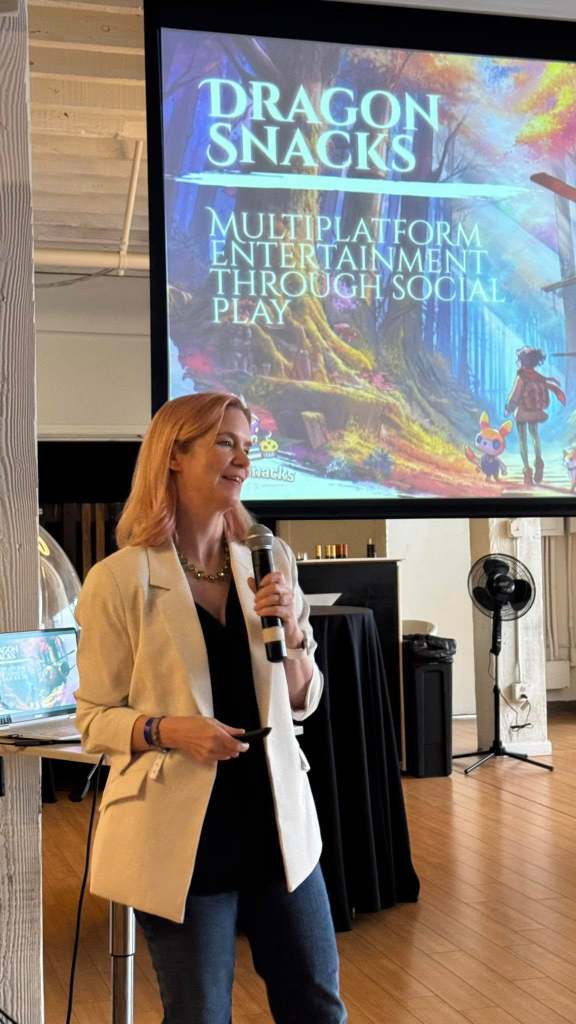
Now, she’s the CEO of Dragon Snacks Games, a studio focused on building a cooperative, creative, and emotionally resonant social RPG.
Note: this interview was edited and condensed
Tell us what you’re working on now.
I’m the co-founder and CEO of Dragon Snacks Games. We’re building a social role-playing game focusing on collaborative, cooperative and creative play—designed to help people feel a sense of belonging and connection, especially Gen Z and Gen Alpha players.
What inspired you to start your own studio?
At Xbox, my team led large partnerships with companies like EA, Riot, and Epic, and I saw how players engaged with that content. I also saw how my own kids play games. What I saw was as players age out of Minecraft or Roblox, they often move into more competitive experiences like Fortnite and Valorant — but there’s a big gap when it comes to collaborative, creative spaces, especially for teenage girls.
When I dug into the data, it was clear that young players really want a place where they feel like they belong. Gen Z and Gen Alpha are growing up with the pressures of living a life on social media, and I thought, “What if we build a place where people can spend time with people who matter? Where they can build something together and where people really feel like everything they do has a positive impact on the other people that they play with?” I wanted to build something that meets those needs.
The combination of realizing that the worst that could happen was eminently survivable, plus understanding what had to happen next for me to move forward was incredibly helpful.
How did you make the leap from idea to action?
It was definitely not overnight. I had been thinking about starting a game studio for about two years before I actually took the leap, and along the way, I had a lot of conversations with people whose judgment I respect.
One formative conversation was with Ed Fries, who asked 2 important questions.
First, he asked, “What’s the worst that could happen?” I realized the worst-case scenario—failing to raise money and going out of business—was survivable. The second question was “What’s holding you back?” and I immediately answered, “I need a game designer!”
The combination of realizing that the worst that could happen was eminently survivable, plus understanding what had to happen next for me to move forward was incredibly helpful.
Another mentor asked, “Do you want to write a line on a résumé, or in a eulogy?” I realized the things that give me the most joy aren’t a better title or a bigger paycheck. It’s really feeling like I am having an impact on people.
What are some other key pivots in your career?
Looking back over 30 years, the ones that really strike me the most are the difficult experiences that I learned a lot from and also, times when I took a risk and a leap.
One of those leaps was becoming the first executive director of the IGDA Foundation. I had no nonprofit leadership experience but believed in the mission—supporting diversity, equity and inclusion in the games industry.
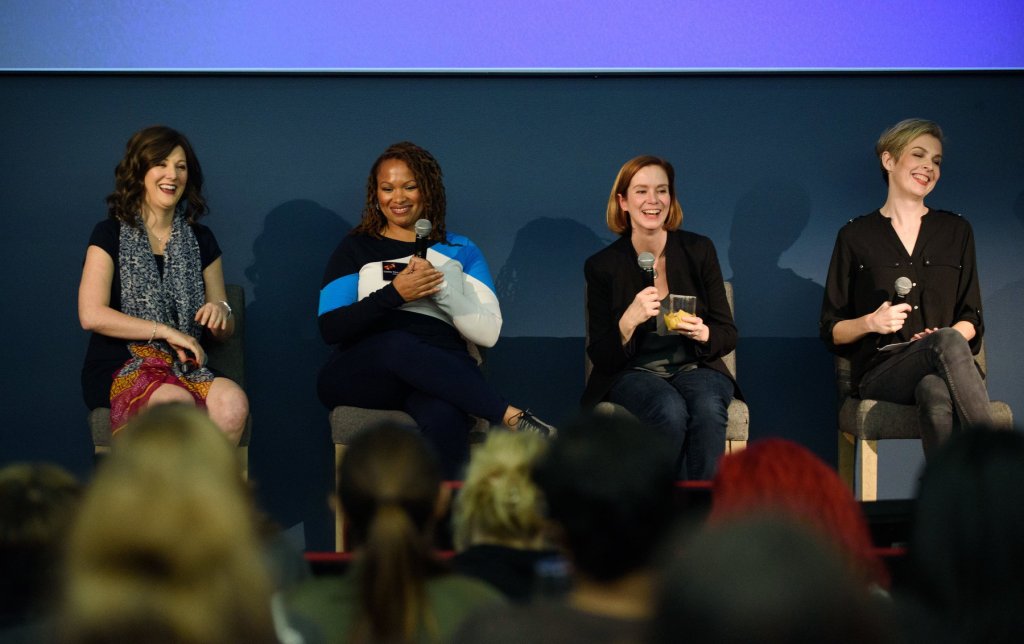
One of my proudest moments in that job was launching a program to support retention of underrepresented developers at GDC in 2017. We brought in our first class of 10 experienced industry professionals from underrepresented backgrounds and set up this program that provided ongoing mentorship and connection for people who, in many cases, came up in the industry where they were the only person who had the background they did.
I never would have had the opportunity to do it if I hadn’t said, “You know what? I’m going to ignore all the reasons why I shouldn’t, and I’m going to go do it.”
What gave you the courage to take big risks like that?
My support network. One, I have an incredible partner who’s supported my decisions financially and emotionally. And I’ve built a network of people I deeply respect—mentors, peers, collaborators— that had confidence in me and who I could lean on. Knowing I wasn’t doing it alone was so important in helping me learn and grow.
How can people earlier in their careers build a strong network like yours?
First of all, don’t be afraid to ask, particularly if it’s somebody who has already indicated that they’re interested in helping you!
I recently hosted a workshop for an accelerator program in Norway, and I noticed that none of the participants had connected with me on LinkedIn. When I asked them why, they all looked a little sheepish. I told them, “I flew here from Seattle because I believe in what you’re doing—so connect with me on LinkedIn!”
Have the courage to ask for a connection. What’s the worst that could happen? They say no or they don’t reply. If that happens to 1/3 of the requests you make, even half of the requests you make, you’re doing really well.
Also, don’t treat relationships like one-time transactions. One way to think about it is that a relationship is like a bank account – you make deposits, you make withdrawals and being there for people, even if it’s not always convenient for you, is really important in building that long-term relationship. Be generous with your support, and it will come back around.
Tell me why me and what you want to get out of it. That kind of thoughtful request is hard to say no to.
What’s your advice for people who want to ask for mentorship but feel awkward about it?
The best mentees have a clear reason for asking me and a willingness to own the relationship. For example, they might ask, “Jen, I would love to set up a relationship where you mentor me for X amount of time so that I can develop XYZ skill which will help me in these ways.”
Tell me why me and what you want to get out of it. That kind of thoughtful request is hard to say no to. And, that kind of relationship ends up being really rewarding for me as well. I actually set aside time for these mentor relationships because they give me energy and joy. The only thing I find frustrating is when I mentor someone and they don’t tell me what happens next! It’s like a cliffhanger!
What career advice would you give your younger self?
Your career is a very long journey and there will be setbacks and there will be successes. Don’t tie your identity to any one job, company, or definition of success.
I used to think success meant having someone else do my PowerPoints. Spoiler – I still do my own PowerPoints, and I’m the happiest I’ve ever been professionally. At the end of the day, it comes down to making an impact on people in a positive way and having people look back and say, “Man, I’m so glad I know her and I’m so glad I had the chance to work with her”.
Thank you Jen for sharing your career journey with us!
 Joyce Lin Coaching
Leave a comment